
Somers Handling

Logistics & ports

Lifting equipment for ports, terminals and logistics operators.

Spreader beams, C-hooks, coil tongs, bespoke handling frames and monorail systems for container and break-bulk ports, steel-stock warehousing, inland terminals and specialist logistics operators.

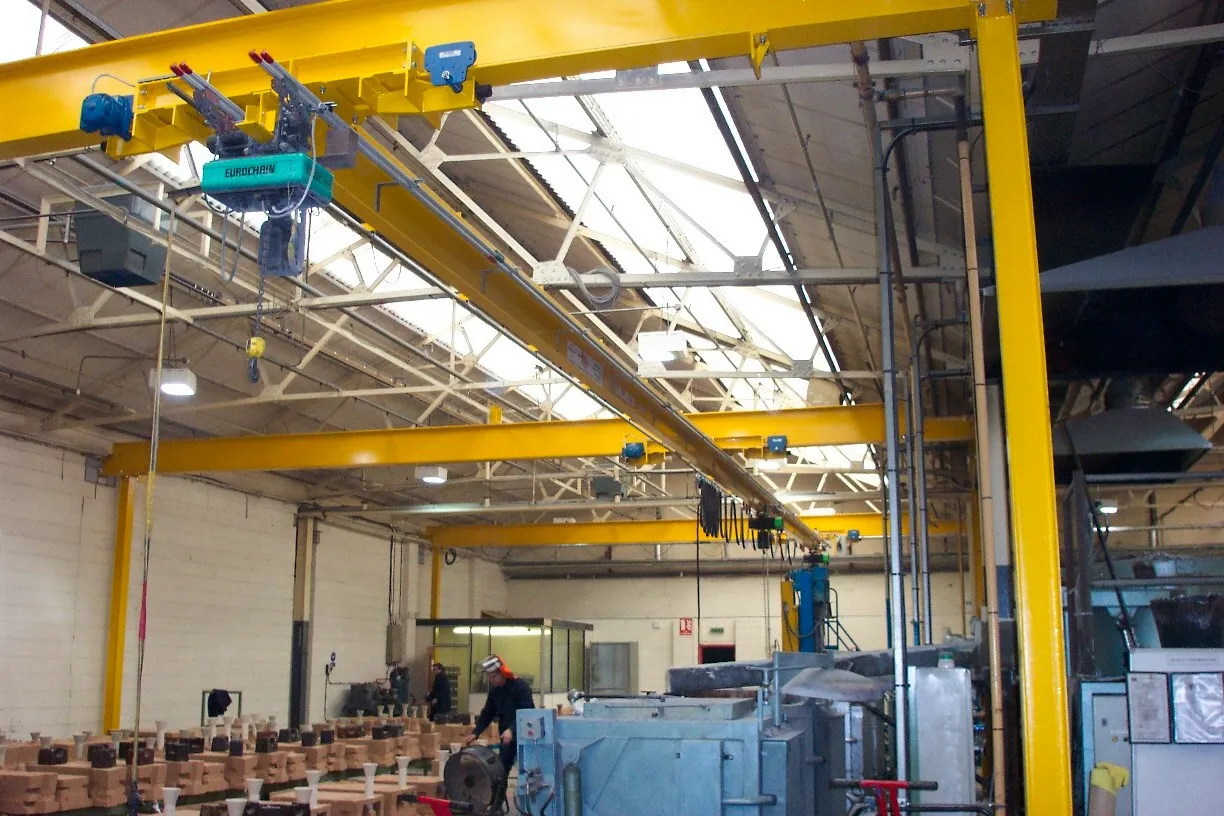
Large-span overhead gantry and monorail system in a Somers-equipped handling facility — representative of the heavy handling systems we supply into ports and logistics terminals.

Ports and inland logistics terminals don’t use many off-the-shelf lifting products — the cargoes are too varied and the volumes are large enough that operators want equipment matched specifically to what they handle. The sector relies on specialist lifting attachments and purpose-designed rigging alongside the container cranes supplied by a handful of global OEMs.

Where Somers equipment is specified

Somers Handling supplies lifting equipment into port terminals, steel-import and steel-export operators, inland container terminals and specialist logistics operators — covering both lifting attachments that work alongside existing quay and yard cranes, and complete overhead handling systems for steel-stock warehouses.

Typical project shapes:

  • C-hooks, coil tongs and sheet grabs for the heavy steel import and export trade moving through UK and international ports, with coatings specified for the coastal environment.
  • Bespoke spreader beams and rigging frames for break-bulk and project-cargo consignments where the load geometry is one-off and generic spreaders don’t fit.
  • Overhead cranes, gantries and monorail systems for rail-connected steel-stock warehousing and inland terminals.
  • Specialist handling attachments — aluminium ingot bundle lifters, pipe-stack tongs, slab lifters, precast handling beams — where the cargo mix rules out catalogue equipment.

Engineering priorities

  • Environment and corrosion. Port and coastal environments demand elevated coating specifications. We typically work to ISO 12944 C5-M or C5-I high-durability systems for equipment that lives in salt air or saline splash zones.
  • Varied cargo, shared rigging. Terminal operators benefit from lifting equipment that covers a range of cargoes with shared rigging characteristics — minimising crew training and changeover time between handling tasks.
  • Volume and duty. Terminal duty cycles are often higher than one-off industrial lifts. Design margins reflect that.

Complementary services

For terminal operators with ongoing fleets of handling equipment, we offer repairs, servicing and modernisation — planned inspections, breakdown response and structural refurbishment of older handling attachments.

Typical applications

Where Somers equipment is specified in this sector.

Coil and steel-stock handling at ports and terminals

C-hooks, coil tongs (OD and ID) and steel-stock handling beams sized for the rail- and road-mode movement of imported and exported steel — coatings and surface treatments chosen to suit the coastal environment.

Break-bulk and project cargo

Bespoke lifting beams and rigging frames for non-containerised project cargo — transformers, wind-turbine components, modularised plant sections — where generic spreaders don't fit the load geometry.

Warehouse and inland terminal handling

Overhead crane, monorail and jib-crane systems for steel-stock warehouses, inland container terminals and rail-connected logistics sites.

Specialist handling attachments

Bespoke grabs, tongs and balanced lifters for specialist cargo — aluminium ingot bundles, pipe stacks, slab consignments, precast concrete — where off-the-shelf port handling equipment isn't suitable.

Products we supply into this sector

Equipment we supply into logistics and ports.

Standards & regulations

Standards we typically work to in this sector.

  • BS EN 13155
  • BS EN 15011
  • LOLER 1998
  • LEEA 059
  • CE / UKCA

Planning a project in logistics and ports?

Send a short description of the load, environment and duty — a Somers engineer will be in touch within one working day.