
BS EN 13155 for spreader beams — what you need to know
The harmonised UK/EU standard for non-fixed load lifting attachments — what it covers, what it doesn't, and how a good supplier's documentation pack should look.
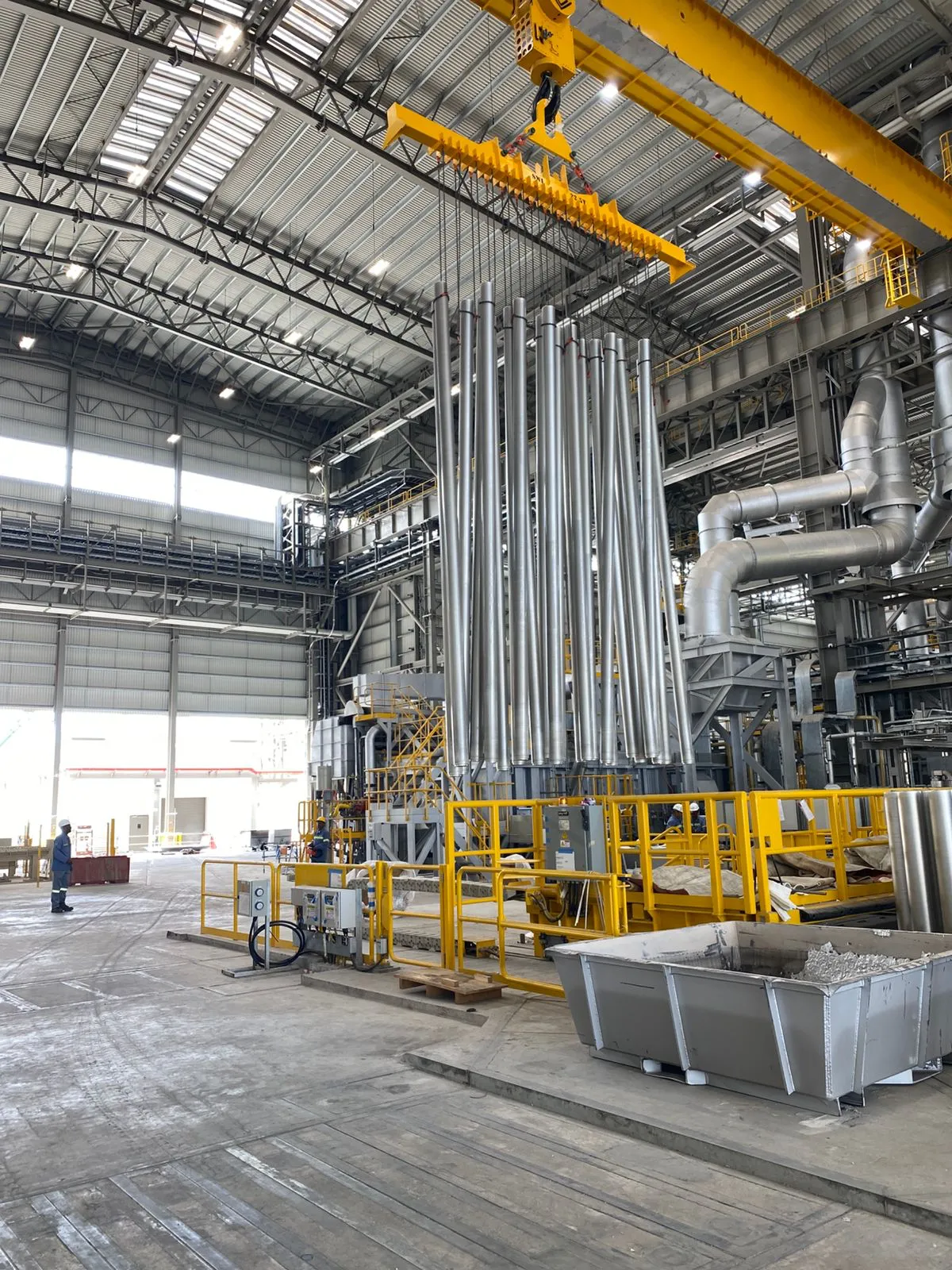
BS EN 13155 is the UK’s harmonised standard for non-fixed load lifting attachments — the category that covers spreader beams, lifting frames, tongs, C-hooks, vacuum lifters, magnet lifters, clamps, and the rest of the lifting accessory world. It’s the framework we design Somers lifting accessories against, and the compliance reference you’ll see on our declaration-of-conformity paperwork.
What it covers
The standard sets out:
- Design requirements — structural, mechanical and ergonomic, including minimum safety factors for specific accessory types.
- Materials — what’s acceptable, what’s excluded, and what additional evidence is required for borderline choices.
- Testing — proof-load testing (typically 125% of SWL for accessories), functional testing, and — for series production — type-testing regimes.
- Marking and documentation — what has to be stamped, engraved or placarded on the accessory itself, and what has to be in the accompanying documentation pack.
What it doesn’t cover
BS EN 13155 does not cover:
- Fixed cranes and overhead travelling cranes — these fall under BS EN 15011 / BS EN 13001.
- Vehicle lifting equipment — that’s BS EN 1493.
- Rigging-side consumables like slings and shackles — those have their own dedicated product standards (EN 1677 for shackles, for example).
Spreader beams and lifting frames sit squarely under BS EN 13155. Hybrid arrangements — a spreader with integrated hoisting, say — may straddle two standards; a competent supplier should flag that at specification.
What a good documentation pack looks like
At delivery, a BS EN 13155 accessory should arrive with:
- Declaration of conformity — signed, referencing the standard and (for CE/UKCA) the notified-body involvement where applicable.
- Design calculations — including the safety factor and the assumed working case.
- Material certificates — traceable to the structural steel used.
- Weld records — including weld procedure references and welder qualifications where Class 1 welds are involved.
- NDT reports — where required, by clause.
- Proof-load test certificate — at 125% of SWL (or higher, where specified).
- Operating and maintenance documentation — including inspection intervals and the relevant LOLER cycle.
How it interacts with LOLER and LEEA 059
BS EN 13155 is the design-and-manufacture standard. LOLER 1998 is the in-service regulation — once the accessory is in your custody, LOLER sets the rules for inspection, thorough examination and record-keeping. LEEA 059 is a piece of industry guidance (from the Lifting Equipment Engineers Association) that sits alongside BS EN 13155 and captures working practice that the formal standard doesn’t make explicit.
In short
If your supplier can’t talk BS EN 13155 in the specification conversation — or can’t produce the documentation pack above at delivery — that’s a useful early warning sign about what you’re buying.
Tags
- Standards
- BS EN 13155
- Spreader beams
Related equipment
Spreader beams and lifting frames
Bespoke and modular spreader beams, H-frames and balanced lifting frames to BS EN 13155 — CAD-engineered to your load geometry.
View productBespoke lifting equipment
Custom lifting equipment engineered end-to-end for non-standard loads, duty cycles and environments — FEA-validated design.
View product