
CE and UKCA marking for lifting equipment
Since Brexit, UK manufacturers and buyers of lifting equipment navigate two conformity marks — CE for Great Britain (indefinitely recognised) and Northern Ireland, and UKCA for Great Britain. A practical summary of what applies where.
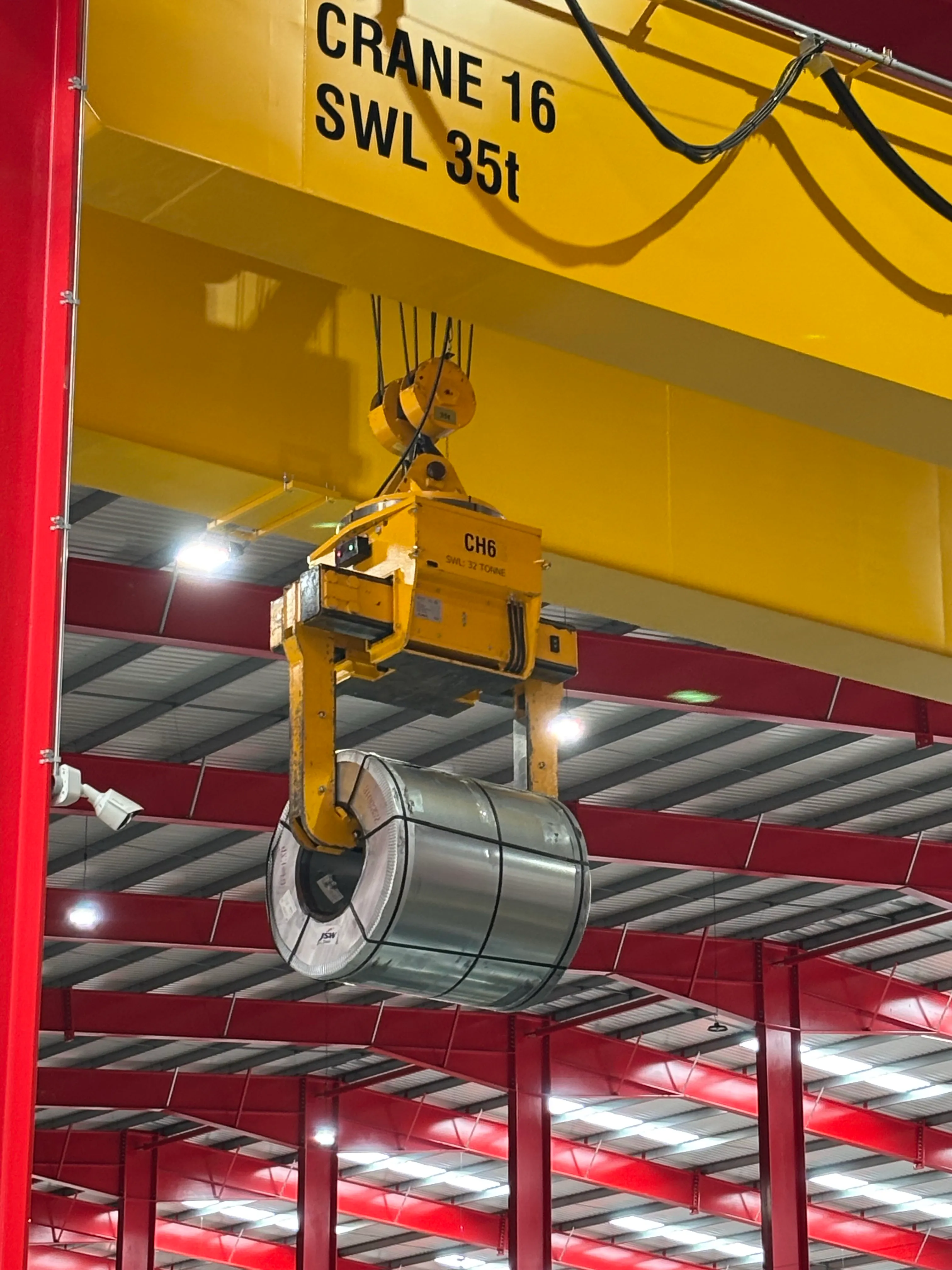
Conformity marking on lifting equipment is the short answer to “does this kit meet the regulatory framework in the market it’s sold into?” Since Brexit, UK manufacturers and buyers have had to navigate two marks — CE and UKCA — with a set of transitional and territorial rules that deserve spelling out clearly.
What the marks actually mean
A CE or UKCA mark is a declaration by the manufacturer that the product:
- Meets the essential health and safety requirements of the applicable regulations (for lifting equipment, principally the Supply of Machinery (Safety) Regulations 2008, which implements the EU Machinery Directive 2006/42/EC into UK law).
- Has been subject to the appropriate conformity assessment procedure — for non-safety-critical lifting accessories this is usually internal production control (Annex VIII); for man-riding equipment or higher-risk devices it can involve a notified body.
- Is accompanied by a declaration of conformity, instructions for use and technical documentation.
The mark itself is a visible label. The declaration of conformity is the document that actually matters — it names the manufacturer, the product, the applicable directives/regulations, the standards used (e.g. BS EN 13155), and is signed by a responsible person.
Where does CE apply? Where does UKCA apply?
As at April 2026:
- Great Britain (England, Scotland, Wales): The UK government has indefinitely recognised CE marking alongside UKCA for most product categories, including machinery and lifting equipment. A manufacturer can choose to mark with either (or both). Most UK manufacturers currently supply CE-marked as a default because it also satisfies EU markets.
- Northern Ireland: The UK(NI) mark applies in combination with CE — this reflects Northern Ireland’s continued alignment with EU single-market rules under the Windsor Framework.
- European Union: CE only. UKCA is not recognised in the EU.
The upshot for most UK manufacturers, Somers Handling included: applying CE marking to lifting equipment produced in Wednesbury covers GB, NI (with UK(NI) where applicable) and EU customers from a single conformity declaration. UKCA is available where a customer specifically asks for it; both can be applied.
What the documentation pack should contain
When you take delivery of a CE- or UKCA-marked lifting appliance, the supplier’s documentation pack should include:
- Signed declaration of conformity, naming:
- The manufacturer and address
- The product, serial number, year of manufacture
- The directives/regulations complied with (for lifting, typically Machinery Directive 2006/42/EC / Supply of Machinery (Safety) Regulations 2008)
- The harmonised standards applied (e.g. BS EN 13155 for lifting accessories, BS EN 15011 for overhead cranes)
- The notified body, where one was involved
- A signed, dated statement by a responsible person
- Operator manual / instructions for use in the customer’s language.
- Technical construction file (the manufacturer keeps this — the customer doesn’t automatically get it but can request it).
- Proof-load test certificate at 125% of SWL (for lifting accessories under BS EN 13155).
- Material certificates for structural steel in the load path.
- Weld records where Class 1 welds are involved.
Red flags
A CE or UKCA label without a matching declaration of conformity — or with a declaration that doesn’t name the standards it claims to meet — is not compliant. It happens, particularly with imported equipment. If you’re buying lifting equipment for UK use, ask to see the declaration before committing.
Does CE/UKCA relate to LOLER and PUWER?
Indirectly. CE/UKCA is about design and manufacture — the product is safe by design and documented. LOLER and PUWER are about in-service use — the operator is trained, the lift is planned, the equipment is inspected. A CE-marked spreader beam is the starting point; ongoing LOLER-compliant use is what keeps it safe through service life.
In short
For UK-market lifting equipment, CE marking is currently the default and is recognised in GB indefinitely; UKCA is the UK-specific alternative; both require the same underlying conformity assessment and documentation pack. A correctly-marked piece of equipment has a signed declaration of conformity naming the Machinery Directive / Supply of Machinery regulations and the relevant harmonised standards.
Somers Handling supplies CE-marked lifting equipment as standard, documented against BS EN 13155 (non-fixed load lifting attachments), BS EN 15011 (bridge and gantry cranes) or BS EN 1493 (vehicle lifts) depending on the product type.
Tags
- Standards
- CE
- UKCA
- Compliance
Related equipment
Spreader beams and lifting frames
Bespoke and modular spreader beams, H-frames and balanced lifting frames to BS EN 13155 — CAD-engineered to your load geometry.
View productBespoke lifting equipment
Custom lifting equipment engineered end-to-end for non-standard loads, duty cycles and environments — FEA-validated design.
View product